Finance Operations
AI Accounting for Tour Operators
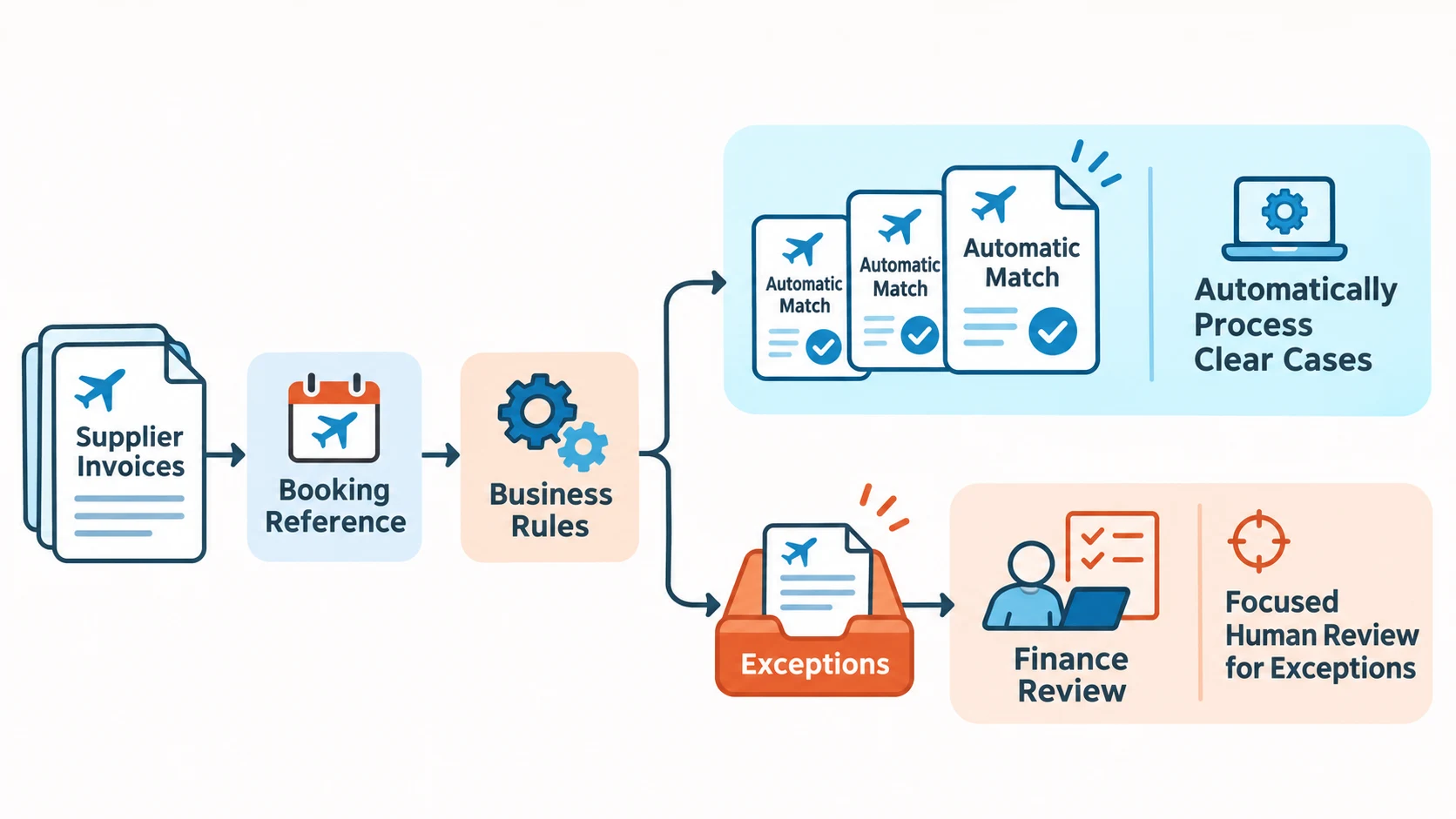
Connect supplier invoices, booking references and payments under your finance rules, automatically processing clear cases and isolating exceptions.
The Commercial Opportunity
Margin visibility requires each travel cost to be connected to the right booking and supplier payment. Supplier invoices, booking references and bank activity often arrive in different formats and at different times. Finance needs a shared, controlled basis for allocating and reviewing them.
For a travel business, this gives finance a timely view of supplier costs and payment progress for margin review and cash planning. It also keeps the accounting rules used in day to day operations at the centre of each decision.
The Booking Reference Connects the Journey
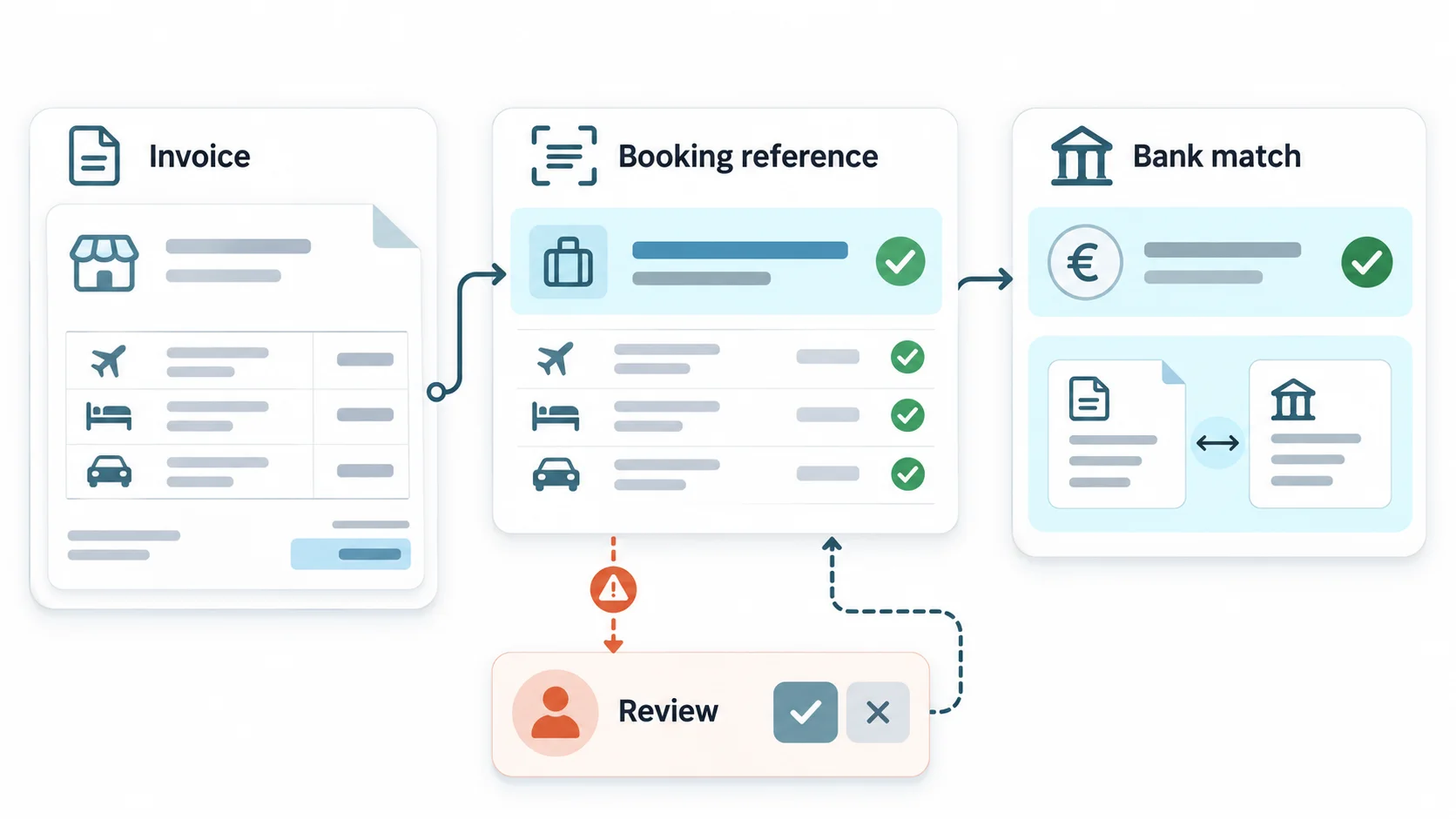
A supplier invoice number is not always the identifier used in a payment reference. In many travel workflows, the booking reference provides the stable connection between the invoice, service provider, travel booking and payment sequence. It anchors the cost allocation and later margin view.
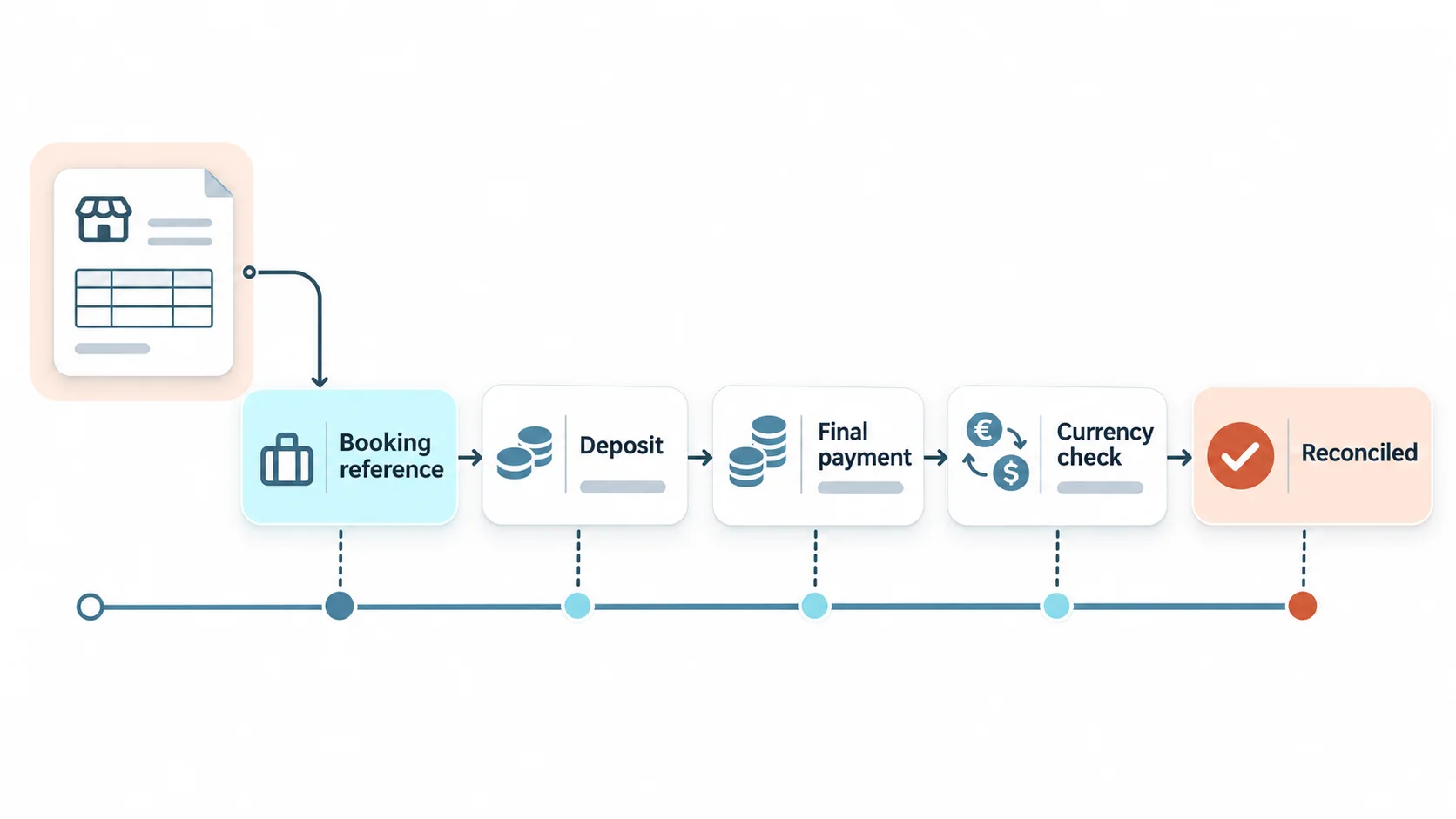
Deposits and final payments can be separated by months or financial years. An invoice may remain partly paid while one booking has several payment events. The process keeps those stages distinct and traceable.
A Controlled Workflow
Read, Verify and Prepare the Invoice
The invoice preparation step reads unprocessed supplier invoices and extracts the document type, supplier, invoice number, amount, currency and booking reference. It compares those details with the booking or cost centre and applies the organisation’s supplier, allocation and tax rules.
Where the details satisfy the defined rules, it can automatically update and post the invoice through the accounting system API. The implementation must first establish the permitted actions and confidence thresholds. Duplicate documents, missing information, several possible bookings and rule conflicts are retained as finance review items.
Apply Business-Specific Patterns
The workflow combines business-specific AI methods with explicit rules. Successfully verified documents can inform patterns for recurring suppliers, naming variations, booking references, account allocation and exceptions. Those patterns are applied to comparable cases; new or contradictory cases remain visible for review.
Confidence is assessed for each proposed change. A recurring supplier name or similar amount alone is not sufficient evidence for an accounting update.
Match the Verified Invoice to Payment Activity
Once an invoice is verified, payment matching compares it with unallocated bank activity. It considers the payment reference and booking reference, outstanding amount, invoice and payment dates, supplier naming variations and, where relevant, original amount and currency.
It keeps complete payments, deposits and final payments separate. It preserves the sequence across the defined payment period and automatically links clear matches where the available evidence and agreed rules support that action.
Information and System Requirements
Travel invoices can arrive as PDFs, scans or incomplete documents from suppliers in many markets. Names, date formats, currencies and tax details can vary between an invoice, payment provider and bank record. A tax rate printed on an overseas document does not establish the correct treatment for your own business. The implementation combines document storage and invoice tools with booking or cost centre logic, supplier data and bank transactions.
Upstream booking reconciliation can establish whether the underlying services are complete before their costs are used.
It defines the information available for each step:
- Invoice text and invoice number
- Amount, original currency and invoice status
- Booking reference and related booking or cost logic
- Supplier records, name variations and allocation rules
- Bank account, payer or payee, payment reference, value date and open payment position
Original amount and currency provide additional checks for foreign currency cases. Tolerance for differences arising through payment providers or currency conversion is defined and applied as a finance rule.
Document recognition, verification and accounting updates are separate steps. Before an update is sent, the current document and booking data are checked. The result is then read back after the update, so changed documents, duplicates and conflicts remain in the defined review process.
Potential and Limits
Reduce Repeated Finance Work
Staff need not reread recurring invoice fields or locate payments by amount and name alone. Verified costs can be grouped by booking reference and linked payment positions can make later margin review more complete.
Focus Review on Genuine Exceptions
Finance receives the cases that need judgement, including conflicting booking references, unexplained currency differences, duplicates, several equally plausible matches and unresolved rule conflicts. Partial payments are tracked as distinct stages; they require review when their relationship cannot be established. Each review item retains the evidence behind the proposed match.
A linked payment contributes to margin review. A complete margin calculation also requires the relevant revenue, cost and business rules.
Tests use incomplete invoices, supplier name variants, partial payments, long payment periods and foreign currencies to determine which groups can be processed automatically. Finance remains responsible for rules, tax treatment, exceptions and closing the accounts.
Before Choosing This Use Case
Before choosing the workflow, we review the current finance work together:
- Which invoices and unallocated bank transactions are handled manually, how much time does this take and where do backlogs, partial payments or uncertain matches create repeat work?
- Which documents, bank records, booking references, supplier rules, allocation rules and connections are reliably available?
- Which tax, operational and organisational exceptions must remain visible, and who owns rules, thresholds and approval of uncertain cases?
The findings establish commercial suitability, the requirements to address first and whether another process should take priority. An AI Audit defines the rules and scope before implementation.
A Clear Starting Point
Find the Right AI Path for Your Travel Business
An AI Audit prioritises the travel processes worth exploring and clarifies the systems, information and responsibilities needed for a sound next decision.
Contact us