Phone Enquiries
AI Voicebots for Tour Operators
Give callers a useful first response and preserve personal service for the questions that need judgement, context or reassurance.
The Commercial Opportunity
Protect the Service Your Reputation Was Built On
Your reputation is built one reassuring conversation at a time. As demand grows, every caller should still feel they have reached a travel business that understands their journey and takes their question seriously.
A travel voicebot gives callers an immediate, useful first response to routine questions, captures the context of their request and brings the right person in when advice, judgement or reassurance matter most. This protects service quality as call volumes grow and gives experienced people more time for advice, conversion and customer relationships.
Make Every Call a Good Start
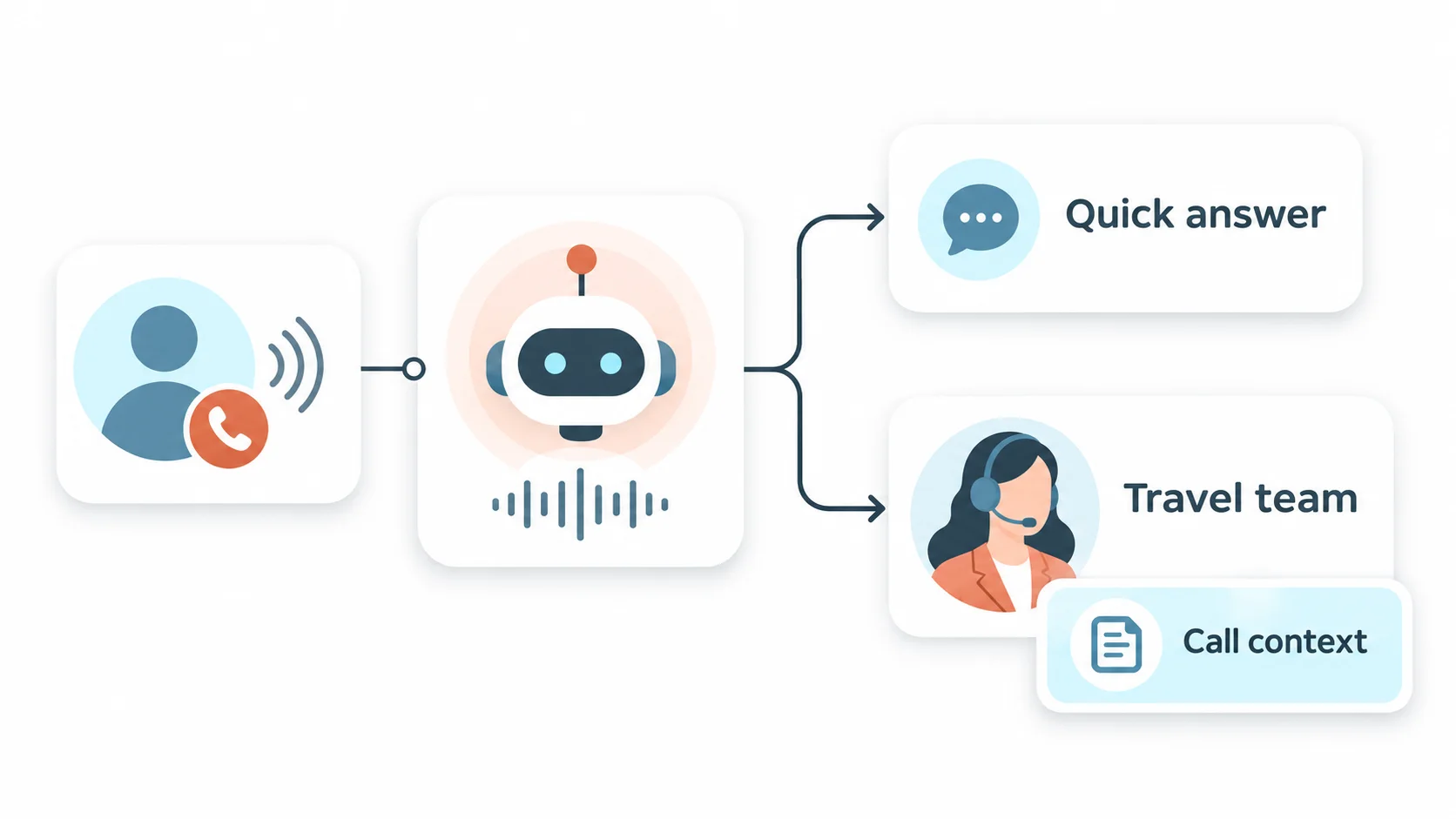
Callers may be ready to book, need clarity before departure, ask about a meeting point or seek help when plans have changed. What they need can depend on date, fare, accommodation, travellers and booking status. The aim is a calm, useful route forward: a concise answer from a current source or a prepared handover to the right team member.
A Controlled Workflow
Short Answers or a Complete Handover
A voicebot is designed specifically for a phone conversation. It prioritises the relevant information, asks only necessary questions and keeps answers short enough to follow naturally.
Suitable call routes include:
- Frequent travel questions about products, journeys, accommodation, inclusions, meeting points and departures.
- Initial enquiry capture with destination, travel period and number of travellers.
- Availability or booking status checks through an authorised system connection.
- Personal booking information after clear identification and permission checks.
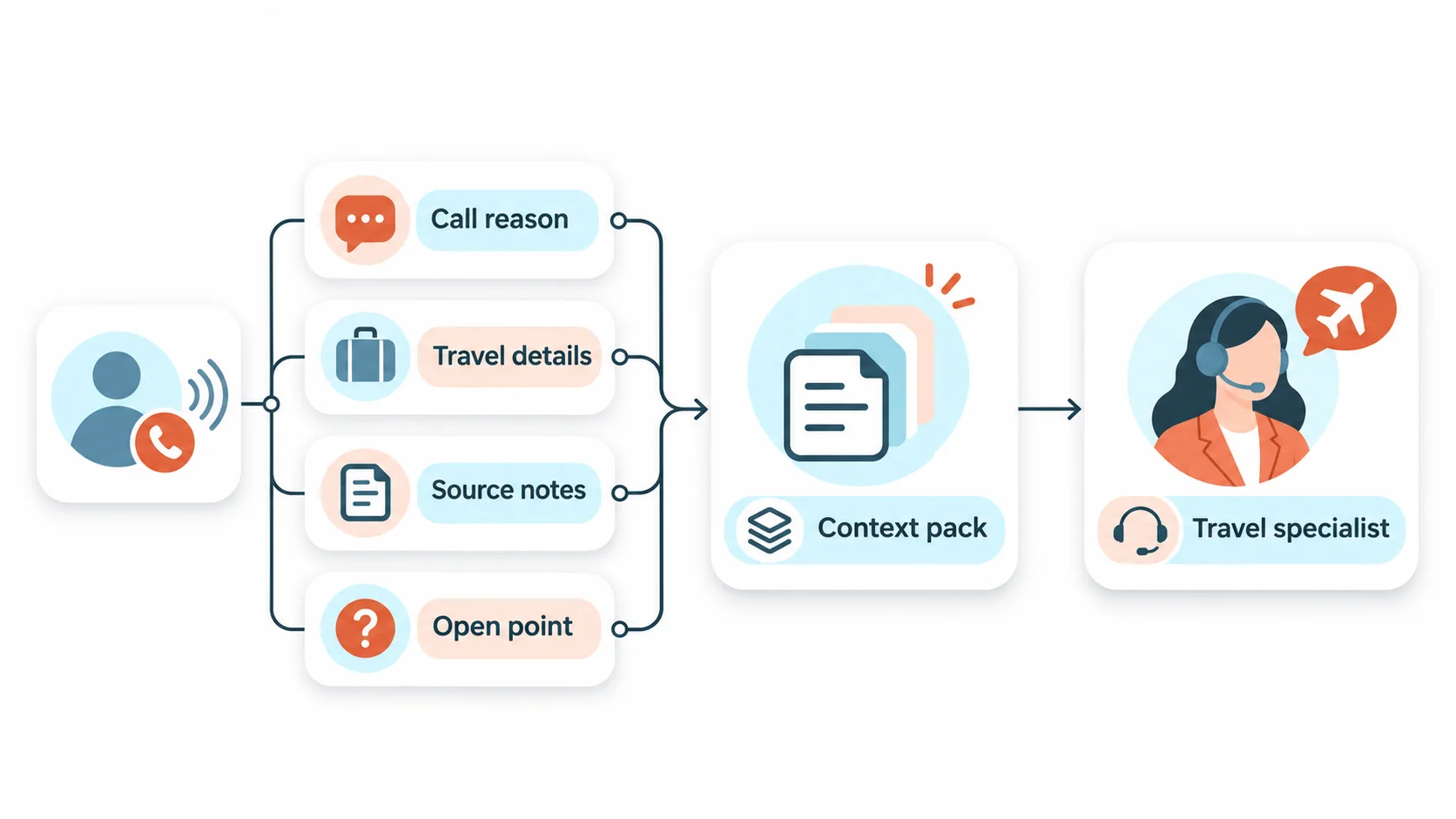
- Sales or service handover with the reason for the call, conversation context and details already provided.
Keep Pace with the Conversation
Callers need the freedom to interrupt, correct a detail or change direction. The system accepts the interruption, retains the conversation context and moves to the relevant next step. This is essential for a natural phone conversation.
Speed also shapes trust on the phone. Speech recognition, request interpretation, data access, quality checks and speech generation all take time. Common answers, likely sources and possible handovers can be prepared in parallel, while research that needs longer or deeper checking moves to the service team with the caller’s context.
Information and System Requirements
The system connects telephony, approved business knowledge, current travel data and the service process. Inputs can include product data, seasonal rules, tailored FAQs and connections to availability or booking systems. Access to personal booking information requires clear permissions.
For more demanding calls, the design can combine search across travel descriptions and documents with structured checks for dates, prices and availability. It considers freshness, source quality and relevance to the caller’s request. The response time available on a phone call is part of the design, alongside answer quality and a prepared handover.
Operating requirements are defined before release: telephony integration, service hours, response time, privacy information, consent, roles, logging and transfer conditions. The receiving team sees the information needed to continue the conversation and the points already clarified or marked for review.
Sources for frequently asked questions can be cached to reduce latency, but those records need continual updates from their authoritative source. If an answer cannot be ready within the available response time and confidence level, the service team receives the caller’s context. Semantic, structured and similarity searches may run in parallel, with freshness and source quality checked before an answer is used.
Potential and Limits
A travel professional owns commercial commitments and personal advice. They take over for complex needs, unclear identity or data, changes, exceptions, price and availability decisions, booking and payment. The handover gives them a prepared starting point while they remain responsible for the outcome.
Binding Phone Bookings Need Particular Care
Binding travel bookings by voice are possible but remain a demanding edge case. Offer conditions have to be communicated clearly, and the customer must provide every required detail correctly. The resulting conversation can be long, error-prone and difficult to verify.
Price and availability commitments, bookings, payments and other consequential steps require defined rules, approval and responsibility. Unclear identity, information or context triggers a handover to personal advice. The implementation should focus on call types that can be handled well, preserving a specialist’s role where the consequence requires it.
Before Choosing This Use Case
Before choosing a voicebot, we assess whether the phone channel, sources and handovers can support it:
- Which call reasons are handled manually, when do queues grow and where does personal advice need more time?
- Which telephony connections, knowledge sources, live data, handover routes and rules are available, and can they meet the required freshness and response time?
- Which identity checks, consent requirements and exceptions must remain visible, when should a specialist take over immediately and who owns binding answers or follow-up?
These findings establish commercial suitability, the workable call scope and the requirements to address first. An AI Audit also considers customer groups, seasonal peaks and current handover quality.
See AI Chatbots for the related website channel.
A Clear Starting Point
Find the Right AI Path for Your Travel Business
An AI Audit prioritises the travel processes worth exploring and clarifies the systems, information and responsibilities needed for a sound next decision.
Contact us