Package Research
Travel Package Sourcing with Quality Checks
Bring supplier components, inclusions and package rules into a reviewable brief before a consultant commits to the combination.
The Commercial Opportunity
A package brings accommodation, transfers, activities, dates and inclusions together. A suitable component on its own does not establish that the combination meets the traveller’s needs or the business’s rules.
Comparing the components repeatedly uses selling time. A sourced package brief can give the consultant a clearer starting point while keeping gaps and approval points visible. This page describes a workflow pattern, not a claim of a completed KEAlike client deployment.
A Controlled Workflow
Assess the Components Before Combining Them
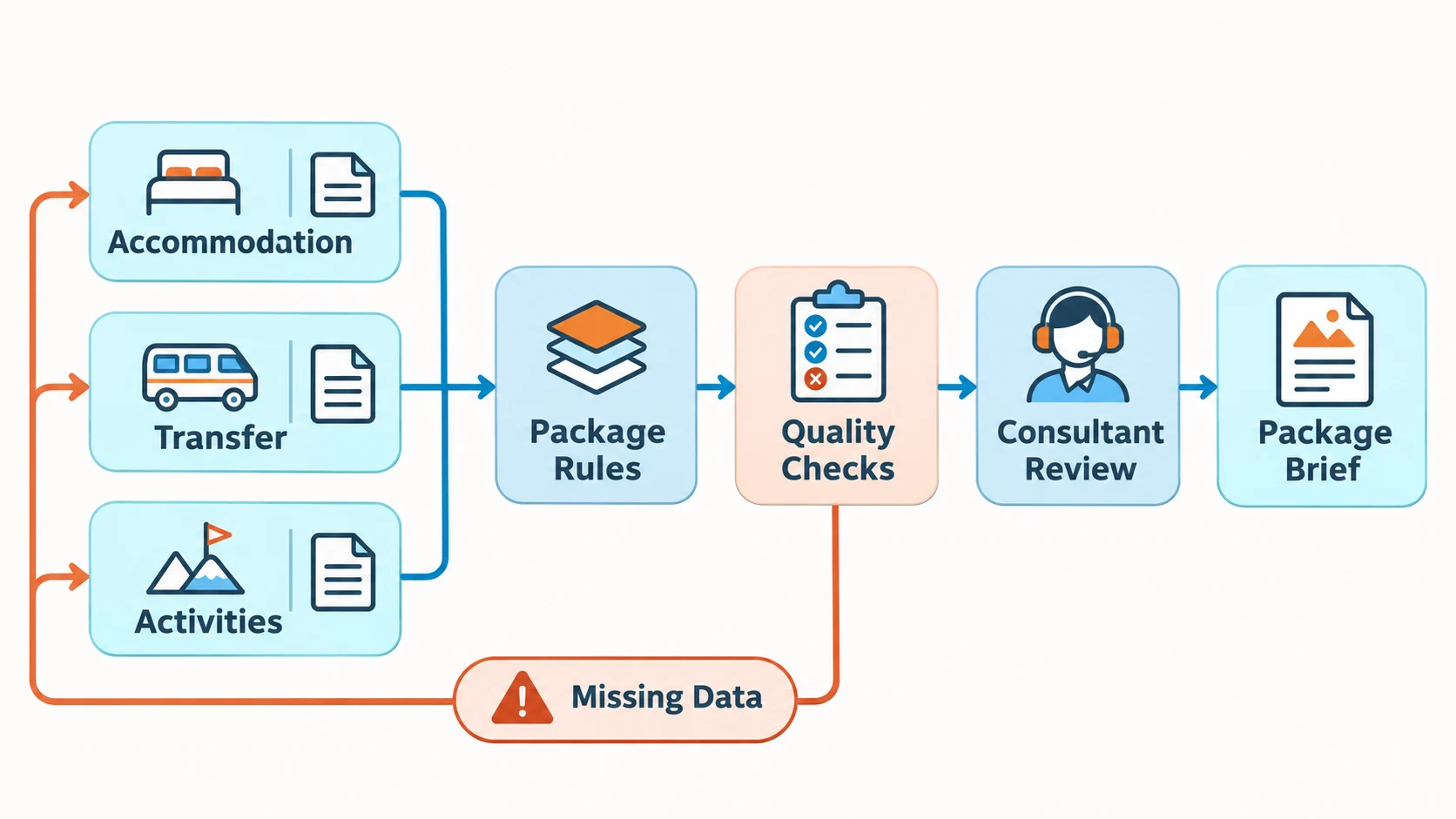
The process structures traveller requirements and permitted commercial constraints, then retrieves candidate components from approved supplier sources. It records dates, inclusions, references and the source behind each proposed element.
Package rules determine which components can be considered together. Missing evidence, inconsistent conditions and unresolved dependencies are flagged rather than hidden in a polished description.
Prepare a Reviewable Package Brief
The brief keeps selected candidates, alternatives, matching evidence and open questions distinct. A consultant can review the combination and identify which supplier detail needs confirmation.
Detailed itinerary research can extend an approved direction into routes and flight comparisons. Email handling is the separate process that prepares a customer response around those findings.
Information and System Requirements
Inputs include:
- Supplier product records, component descriptions and source references.
- Departure dates, service periods and current availability context.
- Inclusions, exclusions and the business’s package rules.
- Traveller requirements and approved commercial constraints.
- Ownership of supplier questions, review and release.
The workflow keeps source material connected to derived suggestions. Updates to a component must remain traceable so the reviewer can tell which version informed the brief.
Potential and Limits
The prepared comparison can reduce repeated component gathering and make the review more consistent. Its usefulness depends on supplier information and rules that genuinely describe the package.
A travel professional checks product fit, availability, price and customer commitments before release. An apparent match does not authorise a booking or confirm a service.
This scope concerns component sourcing and package coherence. Itinerary and offer research addresses deeper route and offer comparisons.
Before Choosing This Use Case
We assess the current work before deciding whether to implement:
- Which package components does the team source or compare manually, and where do repeat checks and supplier questions delay an offer?
- Which supplier records, dates, inclusions, traveller requirements and package rules are reliable and connected?
- Which unresolved combinations or customer commitments require review, and who owns supplier clarification and final approval?
The outcome establishes commercial suitability, missing requirements and scope. An AI Audit provides that assessment.
A Clear Starting Point
Find the Right AI Path for Your Travel Business
An AI Audit prioritises the travel processes worth exploring and clarifies the systems, information and responsibilities needed for a sound next decision.
Contact us